News & Insights

How Often Should Commercial CCTV, Access Control and Intruder Alarms Be Serviced?

Commercial security systems work around the clock, but they are often ignored until something goes wrong. Regular servicing helps ensure cameras are recording clearly, doors are locking correctly and alarm systems will respond when they are needed most.

There is no single schedule for every system

There is no single servicing interval that is right for every commercial security system. The schedule should reflect the system design, the equipment manufacturer and installer’s recommendations, the premises risk, the maintenance contract and any requirements set by an insurer, monitoring provider or applicable standard. A higher-risk, remotely monitored or heavily used site may need more frequent attention than a small, low-risk installation. The key is to agree a documented schedule rather than wait for a fault.

What should a professional service cover?

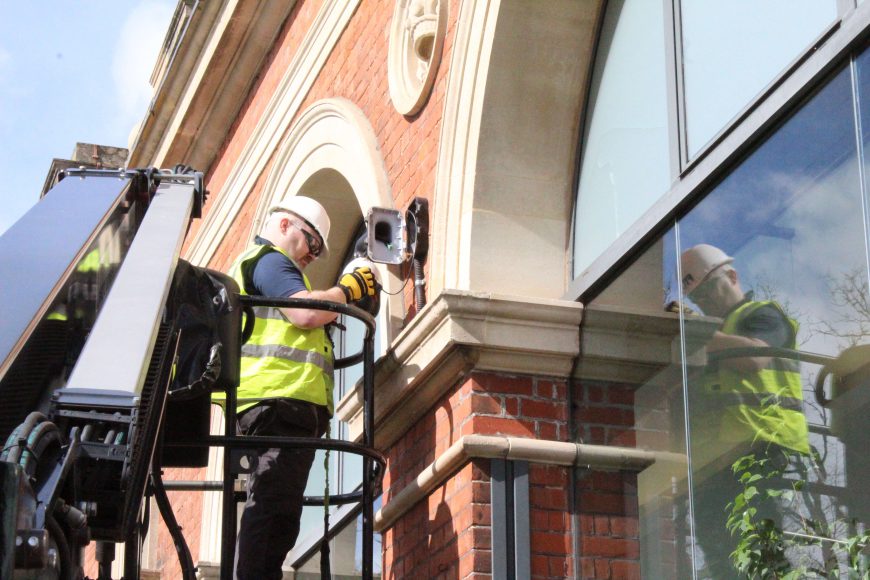
A CCTV service should check camera views, image quality, recording equipment, storage capacity, time and date settings and remote access. Cameras may also need cleaning and refocusing. Access control maintenance should include readers, locks, door closers, emergency release devices and the software used to manage users. An intruder alarm visit normally covers detectors, sounders, signalling equipment, batteries and communication with the alarm receiving centre.

Why planned maintenance matters

Regular maintenance is not only about fixing faults. It can identify failing batteries, damaged cables, obstructed cameras and outdated software before they cause a loss of protection. It also provides an opportunity to review whether the system still matches the way the site is being used.

How FTL Secure Solutions can help

FTL Secure Solutions provides planned support and maintenance for commercial CCTV, access control, intruder alarms and biometric systems. Our team can assess the equipment already installed, review the operational risks and recommend a suitable maintenance programme. FTL’s support options include office-hours and 24/7 packages, with proactive maintenance available on selected plans.

Ready to improve your security?

Do not wait for a failed camera, unreliable door or alarm fault to expose a gap in your protection. Call FTL Secure Solutions on 01344 752222 or email sales@ftlsecuresolutions.co.uk to discuss a maintenance programme tailored to your premises.

HSBC’s CCTV Investment Is a Wake-Up Call for UK Businesses

HSBC’s new London headquarters is set to have one of the most extensive commercial security systems in the UK.

Plans reported for the building at 81 Newgate Street include 46 external CCTV cameras and five additional cameras covering publicly accessible areas inside. Some are expected to include features such as face detection and loitering detection.

Reuters has also reported that the wider security plans could include around 1,754 internal cameras and hundreds of biometric access readers.

Few businesses will ever need security on that scale. Even so, HSBC’s investment shows how quickly CCTV is moving beyond simple recording and towards earlier detection and faster response.

CCTV That Does More Than Record

Many older CCTV systems only become useful after something has happened.

Following a break-in, theft or act of vandalism, someone has to search through the recordings and hope the cameras captured a clear view of the incident.

Modern CCTV can play a more active role. Video analytics can alert staff when the system detects activity such as:

  • Someone entering a restricted area
  • A person remaining near an entrance for an unusual length of time
  • Movement around a building outside normal working hours
  • An object being left behind or removed
  • A vehicle crossing a defined boundary

Instead of discovering an incident the following morning, staff may be able to investigate while it is still taking place.

For businesses using an older system, this does not always mean replacing every camera. A review may identify areas where selected upgrades, improved positioning or better alert settings could make the existing system far more effective.

Face Detection Is Not Facial Recognition

Much of the coverage around HSBC’s plans has focused on the use of “face detection”.

Despite the similar wording, face detection and facial recognition are not the same thing.

Face detection recognises that a face is visible within an image. This can help a camera focus correctly, improve image quality or alert an operator when someone enters a monitored area.

Facial recognition goes further. It analyses facial features and compares them with stored biometric information to identify or verify a person.

That difference matters, particularly where privacy and data protection are concerned. Businesses considering intelligent cameras should understand exactly what the equipment does, what information it processes and how that information will be used.

More Cameras Do Not Guarantee Better Coverage

HSBC’s reported camera numbers are eye-catching, but quantity alone does not make a CCTV system effective.

Good coverage depends on choosing the right cameras and placing them where they can capture useful evidence. Entrances, loading bays, warehouses, car parks, plant rooms and areas containing valuable equipment may all require different types of coverage.

Lighting is equally important. A camera may provide an excellent daytime image but struggle with darkness, glare, headlights or strong shadows.

Intelligent alerts also need to be configured around the site. Settings that are too sensitive can create repeated false alarms caused by weather, reflections or moving vegetation. Once staff become used to unnecessary alerts, there is a risk that a genuine warning will be overlooked.

If your CCTV has not been reviewed since the layout, use or working hours of the premises changed, it may no longer be covering the areas you expect.

Better Results Through Integration

CCTV becomes more useful when it communicates with the rest of the security system.

An intruder alarm could automatically display live footage from the affected area. A rejected access card could bring up the nearest camera, while an intercom could allow staff to see and speak to visitors before opening a door or gate.

This gives staff more context when an alarm is raised and helps them decide what action is required.

It can also make better use of equipment that is already installed. Connecting CCTV, access control, intercoms and intruder alarms may provide a more practical improvement than simply adding more standalone cameras.

FTL Secure Solutions can review how these systems currently work together and identify where stronger integration could improve the response to an incident.

What Other Businesses Can Take from HSBC’s Plans

The takeaway from HSBC’s investment is not that every organisation needs hundreds of cameras.

It is that CCTV should reflect the risks facing the premises today.

Building layouts change. Operating hours change. New entrances are created, stock is moved and valuable equipment may be stored in areas that were not originally considered high risk.

Businesses should regularly check whether:

  • Important areas are still properly covered
  • Faces and vehicle details can be seen clearly
  • Night-time recordings are usable
  • Footage can be found and exported quickly
  • Alerts are accurate and reaching the right people
  • CCTV works properly with alarms and access control
  • Cameras and recording equipment are being maintained

A system can appear to be working normally while still leaving significant gaps in coverage.

FTL Secure Solutions designs, installs and maintains commercial CCTV, access-control and integrated security systems. We can assess an existing installation, identify weak points and recommend practical improvements without automatically assuming the entire system needs to be replaced.

To discuss a CCTV project or arrange a review of your current system, call 01344 752222 or email sales@ftlsecuresolutions.co.uk.
A Security Checklist for Schools During the Summer Holidays

The summer holidays provide schools with an important opportunity to review security while buildings are quieter. They can also create additional risks, with fewer staff on site, contractors moving through the premises and valuable equipment left unattended.

1. Review keys, cards and access permissions

Begin by reviewing access permissions. Disable cards or fobs belonging to leavers, update staff records and confirm that contractors only have access to the areas and times they require. Physical keys should be accounted for and lost keys investigated.

2. Confirm CCTV is recording useful images

Test CCTV cameras and confirm that views have not been obstructed by vegetation, building work or changes to the site. Check that recordings can be found and played back and that the date, time and retention period are correct.

3. Test alarms and update keyholders

Intruder alarms, panic devices and communication with the alarm receiving centre should be tested. Keyholder details must be current so the right people can be contacted during the closure. Doors, gates and windows should also be inspected for damage or poor alignment.

4. Plan around contractors and building work

If building work is planned, consider how it may affect detectors, cameras, cables and controlled doors. Temporary arrangements may be required, and every system should be fully retested before pupils return.

5. Review emergency and lockdown procedures

Finally, review emergency procedures with the people responsible for putting them into action. Current government guidance for education settings emphasises planning, testing and implementing protective security and preparedness arrangements. Any lockdown, invacuation or evacuation plan must be appropriate for the setting, understood by staff and coordinated with life-safety requirements. Technology is most effective when it supports a practised plan.

How FTL Secure Solutions can help

FTL Secure Solutions works with schools, academies and other education providers to maintain and upgrade CCTV, access control and intruder alarm systems. A planned holiday inspection can resolve faults and complete improvements with less disruption to everyday teaching.

Ready to improve your security?

Use the summer break to resolve security faults before pupils and staff return. Call FTL Secure Solutions on 01344 752222 or email sales@ftlsecuresolutions.co.uk to arrange a school security review or planned maintenance visit.

Why Choose an NSI NACOSS Gold Partner for Security Maintenance?

Your security system is only effective if it works properly when you need it. Regular maintenance helps identify failing batteries, damaged equipment, poor camera coverage and communication faults before they compromise your protection.

Choosing FTL Secure Solutions, an NSI NACOSS Gold-accredited security company, gives you reassurance that your CCTV, access control and intruder alarm systems are maintained by a technically competent provider working to recognised industry standards.

Professional maintenance can help reduce false alarms, maintain CCTV image quality, test alarm signalling, identify damaged or outdated equipment, support insurance and police requirements, extend equipment life and provide clear maintenance records.

Security requirements can change as your premises, staffing and operating hours develop. Regular maintenance visits allow potential weaknesses to be identified before they become serious problems.

FTL Secure Solutions provides professional security system maintenance nationwide, covering CCTV, access control, intruder alarms and monitored security systems.

To arrange a maintenance visit or discuss taking over an existing system, contact FTL Secure Solutions.

Telephone: +44 (0) 1344 752222
Email: sales@ftlsecuresolutions.co.uk
Website: https://ftlsecuresolutions.co.uk/

Protect your property with security maintenance delivered by an NSI NACOSS Gold partner.

Why Upgrading Access Control in the Education Sector Is No Longer Optional

In the ever-evolving landscape of education, security is no longer just about keeping doors locked it’s about controlling who has access, when, and where. As campuses grow smarter and more connected, traditional access control systems are falling behind, leaving schools, colleges, and universities vulnerable to a wide range of physical and digital threats.

Access Control, the First Line of Defence

Educational institutions are bustling environments, with hundreds or even thousands of students, staff, and visitors passing through daily. From classrooms and dormitories to labs, libraries, and admin offices, securing these spaces requires more than keys and outdated swipe cards.

Modern threats demand modern solutions and that starts with upgrading your access control systems.

What’s at Risk with Outdated Access Control?

  • Unauthorized Access – Lost or duplicated keys and outdated ID cards can allow unwanted individuals into sensitive areas.
  • Lack of Real-Time Monitoring – Traditional systems don’t offer visibility into whose entering or exiting a building at any given time.
  • Inefficient Emergency Response – In the event of an emergency, slow or manual lockdown procedures can put lives at risk.
  • Compliance Issues – Many institutions must now meet specific safety and privacy regulations that old systems simply can’t support.
  • Integration Gaps – Legacy systems don’t always work well with newer technologies like visitor management, time tracking, or student information systems.

The Benefits of Upgrading Access Control

Modern, smart access control systems offer a range of powerful features tailored to today’s educational environment:

  • Biometric and mobile access for convenience and enhanced security
  • Cloud-based control panels for real-time access management from anywhere
  • Automated lockdown capabilities in emergencies
  • Audit trails and reports to meet compliance and enhance accountability
  • Seamless integration with video surveillance, alarms, and IT systems

An upgrade not only enhances campus safety it improves efficiency, saves money in the long run, and provides peace of mind for students, faculty, and parents alike.

FTL Secure Solutions: You’re Partner in Smarter Campus Security

FTL Secure Solutions specializes in designing and implementing advanced access control systems tailored to the unique needs of the education sector. Whether it’s upgrading a single building or modernizing a multi-campus setup, FTL delivers reliable, scalable solutions that keep your people and property protected.

The safety of your students, staff, and infrastructure depends on proactive, intelligent security systems. Don’t let outdated access control be the weak link in your security chain. Let’s put safety back in your hands because a secure campus is a successful one.

Contact FTL Secure Solutions today on 01344 752222 to schedule your complimentary Access Control consultation and start building a safer, smarter campus.